How to Escalate When Support Stops Replying: A Step-by-Step Guide
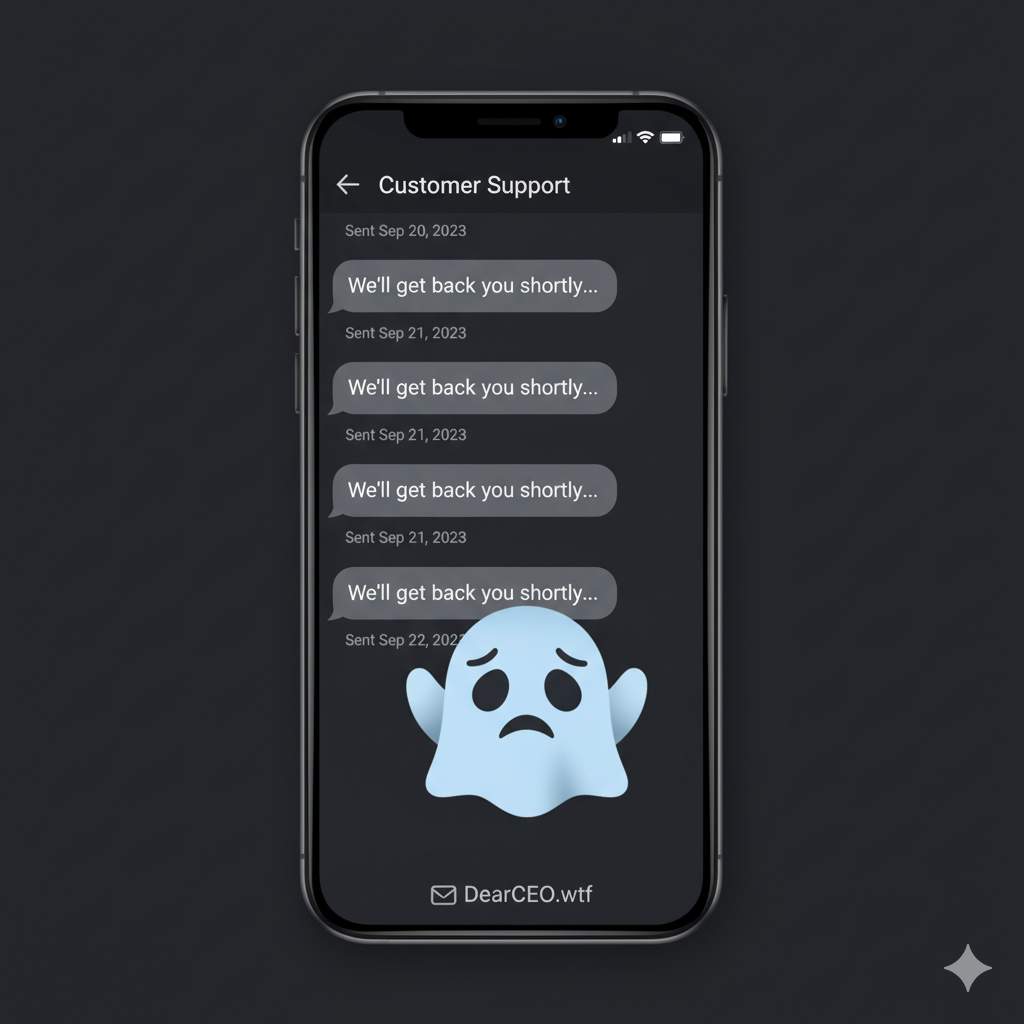
You know the feeling. You opened a support ticket. You provided all the details. They said "we'll get back to you within 24-48 hours."
It's been two weeks.
Your ticket is floating in digital limbo, and you're starting to wonder if anyone actually saw it.
The Ghosting Timeline: What Really Happens
Most support ghosting follows a predictable pattern:
Day 1-2: Initial response with "we're looking into this" Day 3-5: Follow-up emails get no reply Day 6-10: Phone calls result in "I see your ticket, let me check" then silence Day 11+: Complete radio silence
By day 14, your case has likely been buried under newer tickets or marked as "low priority" in their system.
Step 1: Document Everything (Before It's Too Late)
Before you escalate, you need proof. Here's what to gather:
Essential Documentation:
- Ticket numbers and case IDs
- Screenshots of all communications
- Timestamps of every interaction
- Names of agents you spoke with
- Promise dates they gave you for follow-up
- Original receipts or order confirmations
The Paper Trail That Matters:
Sept 1: Opened ticket #12345 - Product defect reported
Sept 2: Agent Sarah responded: "We'll investigate and get back to you by Sept 5"
Sept 6: No response, sent follow-up
Sept 10: Called support, spoke with Agent Mike: "I'll escalate this to our supervisor"
Sept 15: Still no response to any communication
Step 2: The 72-Hour Rule
If you haven't heard back in 72 hours after your last contact attempt, it's time to escalate. Don't wait longer.
Here's why: Every day you wait makes your case seem less urgent to them. Plus, many companies have internal policies about response times that you can reference.
Step 3: Find the Right Escalation Path
Not all escalations are created equal. Here's the hierarchy that actually works:
Level 1: Supervisor/Manager
- When to use: First escalation attempt
- How to find: Ask directly: "Can I speak to your supervisor?"
- Success rate: 30-40%
Level 2: Customer Experience Team
- When to use: When supervisors can't help
- How to find: Look for "Customer Experience," "Customer Success," or "Customer Advocacy" teams
- Success rate: 50-60%
Level 3: Executive Office (The Big Guns)
- When to use: When everything else fails
- How to find: CEO, COO, or VP of Customer Experience
- Success rate: 80-90%
Step 4: The Escalation Email That Gets Results
Here's the template that actually works:
Subject: URGENT: Escalation Request - Case #12345 - No Response in 15 Days
Body:
Dear [Executive Name],

I am writing to escalate a customer service issue that has gone unresolved for 15 days despite multiple follow-up attempts.

**Case Details:**
- Ticket #: 12345
- Issue: [Brief description]
- Original Date: September 1, 2025
- Last Response: September 2, 2025

**Timeline of Attempts:**
- Sept 2: Agent Sarah promised response by Sept 5
- Sept 6: Sent follow-up email (no response)
- Sept 10: Called support, spoke with Agent Mike who promised escalation
- Sept 15: Still no response to any communication

**Requested Resolution:** [What you want]

I have been patient and professional throughout this process, but the lack of response is unacceptable. I would appreciate your direct intervention to resolve this matter promptly.

Thank you for your attention to this urgent matter.

Best regards,
[Your name]
[Your contact info]
Step 5: Track Your Escalation
Once you've escalated, track the response:
- Day 1: Email sent to executive office
- Day 2-3: Should receive acknowledgment
- Day 3-5: Should receive resolution or next steps
- Day 7: If still no response, consider additional escalation
Real Case Study: The $600 Samsung Win
A customer was hit with a surprise $600 charge months after a device trade-in. Here's what happened:
Months of support contacts: Hours in chats and on the phone, transferred again and again The verdict from support: The issue was "unresolvable"
Escalation Day: One email to Samsung's executive office Result: The $600 charge was dropped in less than 24 hours
The difference? Going straight to decision-makers instead of getting stuck in the support loop.
The Tools That Actually Work
DearCEO.wtf Executive Escalation Builder
- Researches executive contacts with AI, rated by confidence
- Writes a professional escalation email from your facts
- Gives you the best odds of a response
Why It Works:
- Direct access to decision-makers
- Professional presentation that gets attention
- Clear documentation of the problem
- Reasonable requests that executives can approve
When All Else Fails: The Nuclear Option
If executive escalation doesn't work, you have options:
- File a complaint with the Better Business Bureau
- Contact consumer protection agencies
- Document everything for potential legal action
- Share your experience publicly (companies hate bad PR)
The Bottom Line
Support ghosting isn't personal—it's systemic. But you don't have to accept it.
The key is moving fast, documenting everything, and escalating to the right level before your case gets buried forever.
Most importantly: Don't waste weeks hoping they'll respond. After 72 hours of silence, it's time to escalate.
Ready to skip the ghosting and get real results? DearCEO.wtf can help you escalate professionally and effectively.